
Instead of a static form, SellerChat holds a real conversation, gathers the context needed to qualify, and hands the conversation over, answering only from your own content.
Asks about the business problem, the size of the company and the type of engagement, so that the inquiry is ready to review.
Explains your areas of expertise and your approach from your own pages. Where the material has no data, it is built to say so plainly.
Gathers what was said and the preferred way to get in touch and hands the conversation to your team.
 Assistant on your website
Service page
Assistant on your website
Service page
Clients compare several firms and go with the one that answered first. SellerChat answers from your website, records the problem and passes the consultation request straight on. The widget promises no outcome and no timeline that cannot be confirmed.
No separate implementation project is needed. You gather the material, paste one line of code onto your pages, and the conversation starts answering from that material.
It studies your areas of expertise, your approach and your FAQ, the answers your consultants give every day.
One line of code on your pages. You do not have to rebuild the site.
Clients get an answer without waiting for a consultant, and the chat records the problem, the size of the company and the type of engagement.
The conversation reaches your team with its context: what the person asked, what has already been explained and what is still unknown.
A visitor's question comes up before they are ready to leave contact details. The conversation answers it from your material, and everything else goes to a consultant.
Create an account, point SellerChat at your own content, and the conversation will start where the visitor is now, while a consultant gets it with the context.
How the conversation clarifies an inquiry, what lands in the consultant's record and when a person steps in.
It answers only from your website and your FAQ. Where the material has no data, it is built to say so plainly.
The business problem, the size of the company, the type of engagement and contact details, everything your team needs to prepare for the consultation.
A website address, a confirmed email, material for the knowledge base and one line of code on your pages. The ready code appears in your client account together with the estimate.
The real questions people put to a consultant on the website before they agree to a meeting.
They are not checking competence in general but experience in their situation: company size, industry, type of problem.
How many sessions, what comes out of it, who takes part on the client side. Without that they cannot see what they are paying for.
Not a number of days, but the order of the stages: where you start and when the first result shows up.
People, data, access to the team. A common reason for backing out is the feeling that they will end up doing it all themselves.
A question about accountability. A person answers that one, but it is worth hearing before the meeting.
The client describes a symptom, not a problem. The conversation helps put it into the client's own words before the talk turns to fees.
 Assistant on your website
Service, strategy session
Assistant on your website
Service, strategy session

Two situations where any answer is worse than an honest handoff to a person.
What is wrong at the client and what they should do is a consultant's work after a conversation, not a conclusion drawn from a few lines in a chat.
The fee depends on the scope and the scope depends on the goals. The widget names neither.
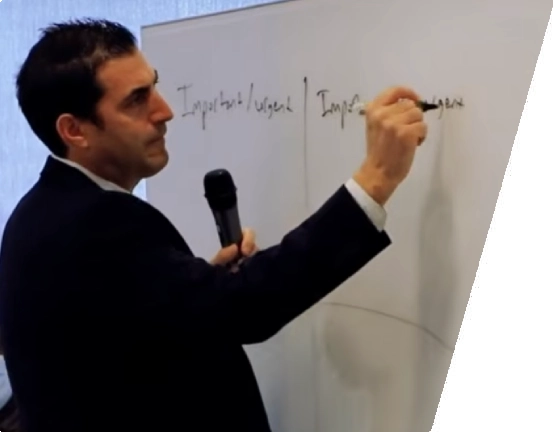
Focus on making your customer as successful as possible, and your own success will follow.
Good marketing makes the company look smart. Great marketing makes the customer feel smart.
Nobody knows about you as it is, and on top of that you are being modest

Set up the first conversation on the pages that matter: what to explain, which questions to ask, when to stay quiet and what to pass to your team.