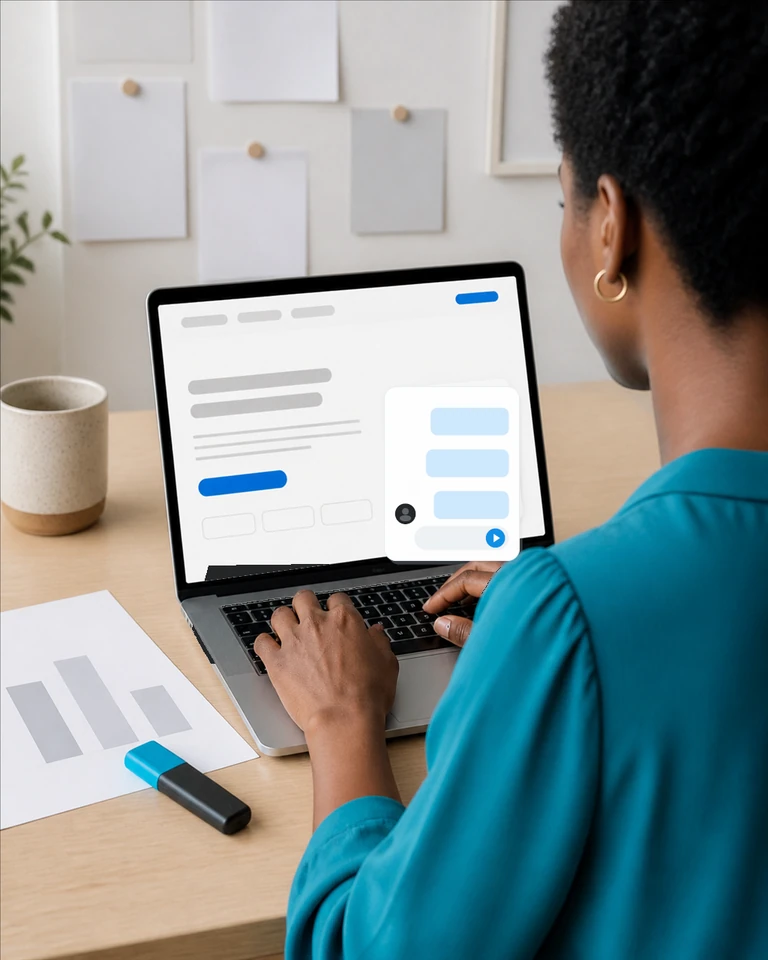
Instead of a static form, the conversation helps describe the task, answers from your material and hands the inquiry to a sales rep along with the campaign the person came from.
Asks what they need, which campaign they came from and what the timing is, so that the lead is ready for the sales team.
Explains features, use cases and fit from your own pages. Where the material has no data, it is built to say so plainly.
Gathers the details and the contact information and hands the lead or demo conversation to your team.
 Assistant on your website
Service page
Assistant on your website
Service page
Visitors arrive from your campaigns, skim the page and most leave without filling in the form. SellerChat answers from your website, works out the intent and passes the lead straight on. The widget promises no feature and no result that cannot be confirmed.
No separate implementation project is needed. You gather the material, paste one line of code onto your pages, and the conversation starts answering from that material.
It studies your pages, your use cases and your FAQ, the answers your team gives leads every day.
One line of code on your pages. You do not have to rebuild the site.
Leads get an answer without waiting for a sales rep, and the chat records what they need, where they came from and the timing.
The conversation arrives with the task described and a convenient way to get in touch, if the visitor gave one.
A real answer instead of a form: a visitor who came from an ad gets to ask their question, and a sales rep gets the task described.
Create an account, point SellerChat at your own content, and the conversation will start where the visitor is now, while a sales rep gets it with the context.
How the chat qualifies leads, what it records and when it brings in a person.
It answers only from your pages and your FAQ. Where the material has no data, it is built to say so plainly.
What the person asked, which campaign they came from, what timing they mentioned and how best to reach them. Separately, what could not be established.
A website address, a confirmed email, material for the knowledge base and one line of code on your pages. The ready code appears in your client account together with the estimate.
Someone who clicked an ad arrives with a specific expectation from that ad. The first question is almost always about it.
Whether the promise in the ad matches what is on the page. A gap here reads as a bait and switch.
Size of the business, niche, budget. A check on whether it applies, not interest in the product.
They have just seen three similar ads and cannot remember what set them apart.
Not a description of the product, but the first practical step.
The worry about getting stuck in a project instead of testing an idea quickly.
The click is already paid for, and the form asks for contact details before the person has worked out whether they are in the right place. The conversation answers the question before the form does.
 Assistant on your website
Campaign landing page
Assistant on your website
Campaign landing page

Two situations where an answer does damage precisely on paid traffic.
If the ad says more than the page delivers, the widget does not confirm it. What needs fixing is the ad.
No forecast of inquiries and no promise of an effect. It has no such data.
The future of talking to customers is engaging through every channel there is: phone, email, chat, the web and social networks.
The better you understand your customers, the smarter your decisions and the more successful your business.
Nobody knows about you as it is, and on top of that you are being modest
Set up the first conversation on the pages that matter: what to explain, which questions to ask, when to stay quiet and what to pass to your team.